
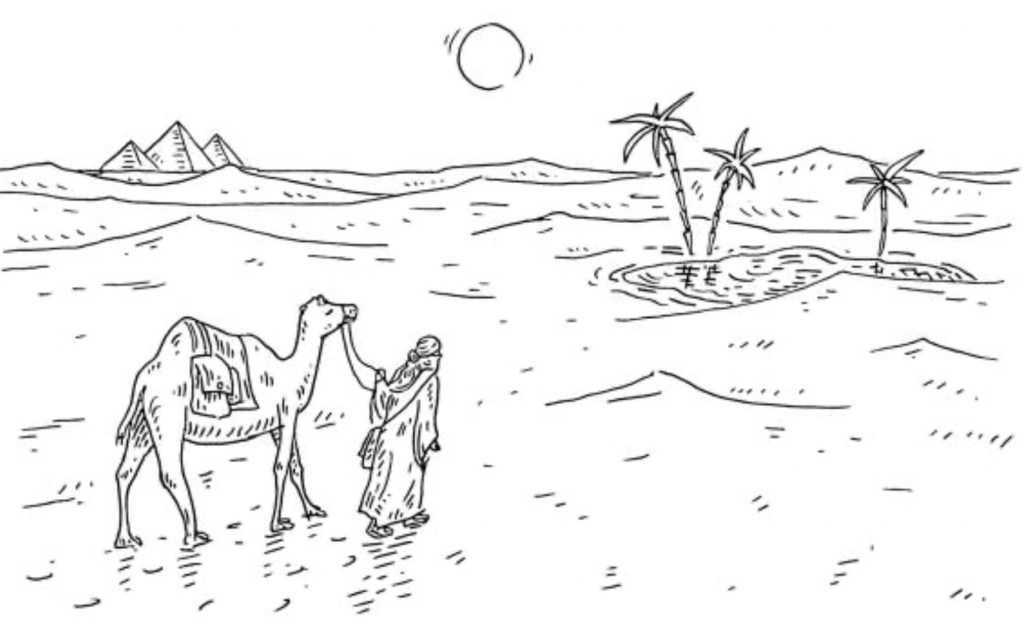
When you think of a nomad, what picture comes to mind? A sun-scorched desert dweller packing up his tents and traveling by camel from one oasis to another? Sounds about right. AI defines it this way: “A nomad is a person who moves from place to place rather than settling down in one location, often for practical reasons like finding food or pasture for livestock. Traditionally, nomads were tribes that traveled to find resources, but the term also refers to modern individuals who prefer a lifestyle of travel and movement”. Predictably, there are now clothing and household companies that cater to such a lifestyle. The mindset is minimalist by necessity, and adventure awaits.
But consider the stress of regularly embracing unfamiliar impermanent surroundings, developing new relationships. Imagine the emotional tension of being the “other”. I imagine that developing new connections and life rhythms would be easy to neglect, knowing you would be moving on again. Even with strong motivation and inner strength, difficult is the most likely descriptor, traumatizing the worst. Relationships and ‘stuff’ alike would be held loosely to cope with shifting addresses. The temptation to just ‘settle down’ would be significant.
Now consider that we, as believers, are called pilgrims and strangers in Hebrews 11. In so many of those stories of faith that God chose to share with us, this was a literal reality. Packing up their stuff and moving into new and often hostile territory was a stunning demonstration of faith in God. We read the account and then parse and theologize, often not considering the full impact of the difficulties of such obedience. Of course it is a picture of how we too must hold our conviction and affection in a world that is passing away, remembering that our environment is corrupted by lust, and held in the sway of our mortal enemy. Yet we are not called to isolation, but rather surprisingly, He wants our participation with those around us for the good of the community and the Gospel. Being salt is our calling, perfecting holiness in the fear of God – using the brief moment we have here to learn kingdom ways, bringing as many as possible along with us. Salt makes one thirsty, and our lives of integrity in a difficult time can stir interest in the reason for our hope.
Think of Jesus’ parable about the sower. He has sown the seed of His word in our lives. We respond. We can find plenty of logical and practical reasons – even popular theology – to diminish its call to follow Jesus’ ways rather than our own. We are basically spraying Round-up on it. Or we can applaud the principles, admire religious proponents, pop a bumper sticker on the car and then wither away like a drooping plant as ridicule or trials scorch the garden. More likely is the Word experienced, embraced, and carelessly neglected in the rush and activity of living. This is where we need a reminder that ‘this world is not our home, we’re just passing through”. Only one in four plants thrive in the parable. What is the difference? The soil – the heart – the intentional cultivation of the message.
Consider the people freed from hard slavery in Egypt, wandering with their sourdough starter and carrying their household items on their backs. God fed them with manna, supplying only one day’s portion in the morning. If they took extra it would rot. Sometimes they longed for a return to slavery rather than wandering in dependence. What is the lesson here? Hodge makes the point well: “Property is like manna, it will not bear hoarding.” Calvin points out that “All that we have is manna… And just as manna, which was hoarded to excess out of greed or lack of faith, immediately putrefied, so we should have no doubt that riches which are heaped up at the expense of our brethren are accursed and will soon perish and their owner will be ruined with them.” “At the expense of our brethren” bears some contemplation, but the Israelites’ wilderness wandering is a picture story separating shadow from substance.
Jesus agrees.“Don’t pile up treasures on earth, where moth and rust can spoil them and thieves can break in and steal. But keep your treasure in Heaven where there is neither moth nor rust to spoil it and nobody can break in and steal. For wherever your treasure is, you may be certain that your heart will be there too!” Mt 6:19-21jbp What does that look like? Hospitality, generosity, joy, spiritual curiosity, a heart to serve, the law of kindness on our tongue – these are just a few of the marks of a pilgrim. This kind of person attracts the non-believer and adorns the doctrine of the Gospel, preaching without words, incarnating the grace of the kingdom message.
So pilgrims, grab your staff, set your heart, and let’s climb the narrow, steep, rocky path with a twinkle of the Daystar to guide.
Shalom!!

 salt-shaker.blog
Leave a comment